The built environment now accounts for 34% of global CO₂ emissions and consumes 32% of all global energy¹ — and the gap between where we are and where we need to be is widening. Emissions from the sector have increased by 5% since 2015, moving in the opposite direction of the 28% reduction required by 2030 to meet the Paris Agreement targets.²
As a luxury interior design studio that London-based clients have trusted with their most significant properties, our decisions carry real environmental consequence. This is not peripheral to our work — it is central to it.
Below, we set out the five principles that guide our approach on every project, using our Chelsea, Fernshaw commission as a live case study.
1. Reduce, Re-use and Recycle
The first question we ask on any project is not what needs to be added, but what can be retained. Research consistently shows that refurbished buildings exhibit the lowest carbon footprint of any construction type, owing to the sustainable practice of reusing existing materials and the benefits of thoughtful retrofitting. That principle shapes every decision we make from day one.
As interior designers in London working across some of the city’s most architecturally significant addresses — from interior design Chelsea commissions to projects in Kensington and Belgravia — we encounter a consistent pattern: perfectly good materials being discarded simply because they no longer suit an aesthetic. We approach every project with the intention of reversing that.
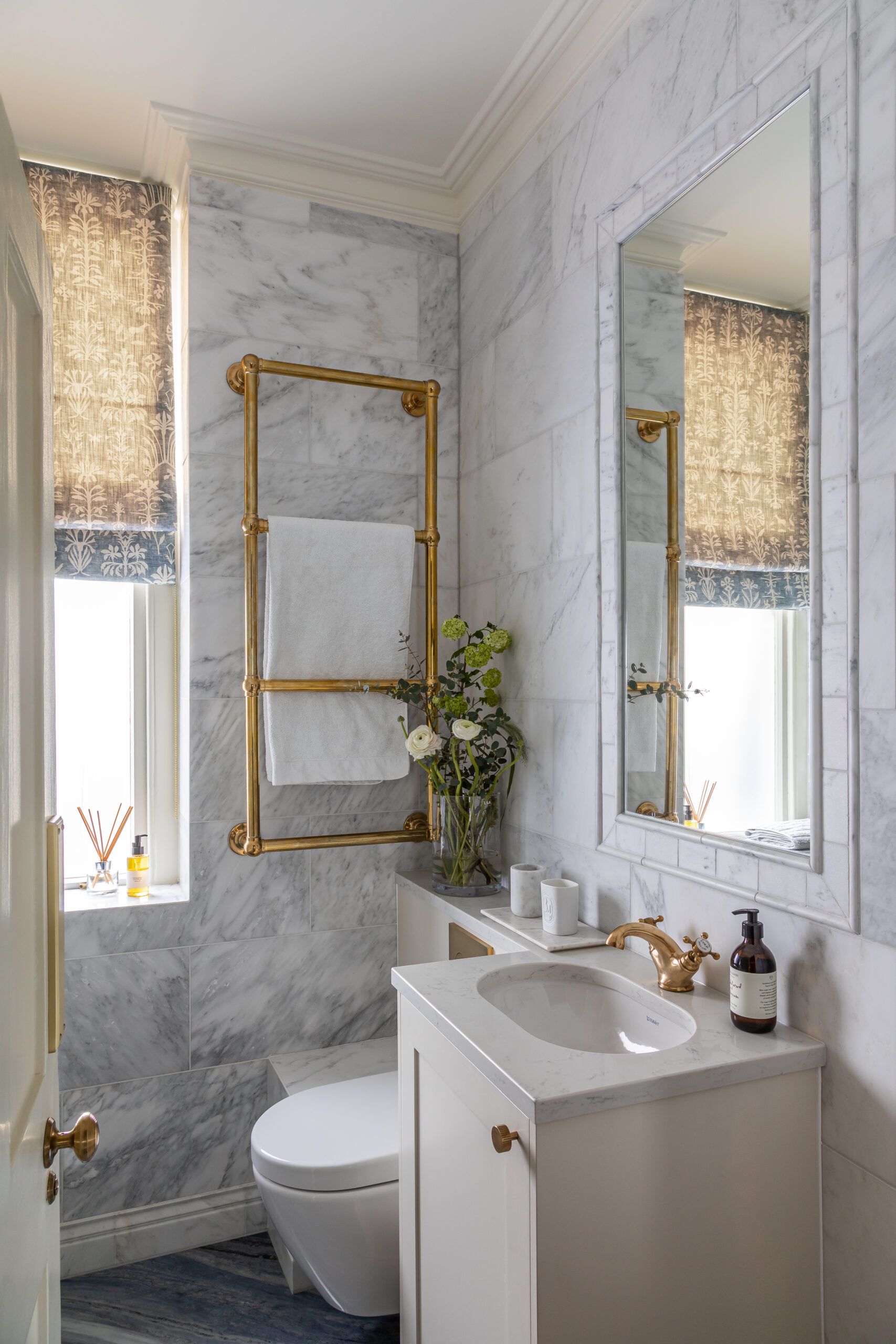
On this Victorian apartment, the existing kitchen was in perfectly good condition, but no longer suited the character of the space. Rather than sending it to landfill, we found it a new home — carefully removing the units to prevent damage and arranging collection directly from site. The same discipline was applied throughout: wardrobes in the principal bedroom and third bedroom were renovated and redecorated rather than replaced; existing ironmongery was assessed, reclaimed and reinstated wherever possible; and a perfectly functional shower room was refreshed with new brassware and a mirror rather than stripped out entirely.
What this takes is method, not magic. There are well-established channels for responsibly rehoming cabinetry, appliances and fixtures, and we use them consistently. The result is a meaningful reduction in both waste and the embodied carbon embedded in new materials.