Tips from our London design studio on the art of the double-dressed window  

One layer often falls short — both in practical terms and in how it sits within the architecture of a room. Layering introduces a richness that allows the window to feel woven into the scheme, rather than resolved as an afterthought.

wide shot of new interior design project

What exactly is a ‘double-dressed’ window, and why is it having a moment right now?

A double-dressed window is a considered approach to window treatments combining a functional base layer — such as a blind or sheer — with a more decorative outer element like full-length drapery. It is rarely about decoration alone. Each component has a purpose, and together they create a layered, thoughtful response to the way a space is lived in.

The appeal lies in what a single treatment simply cannot do. Layering introduces a richness of texture and material that allows the window to feel woven into the scheme, rather than resolved as an afterthought. The broader cultural shift toward interiors that feel uniquely personal and considered has made this approach increasingly resonant. We want window dressings that respond to light, privacy, and the rhythm of daily life — rather than simply covering the window.

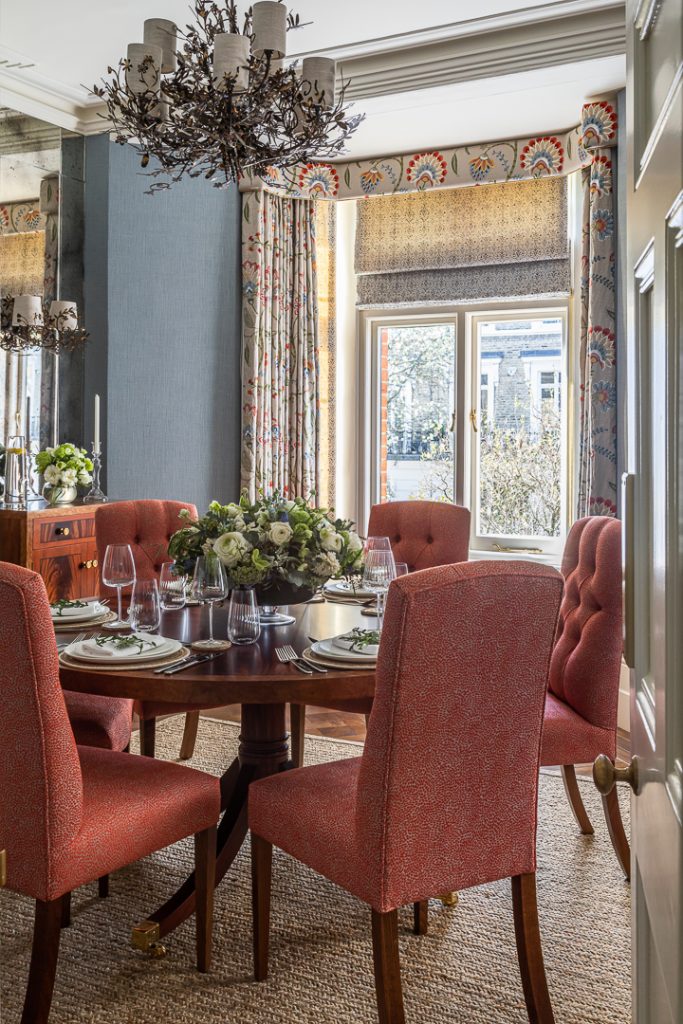
Image of double window dressing in a Surrey renovated property.
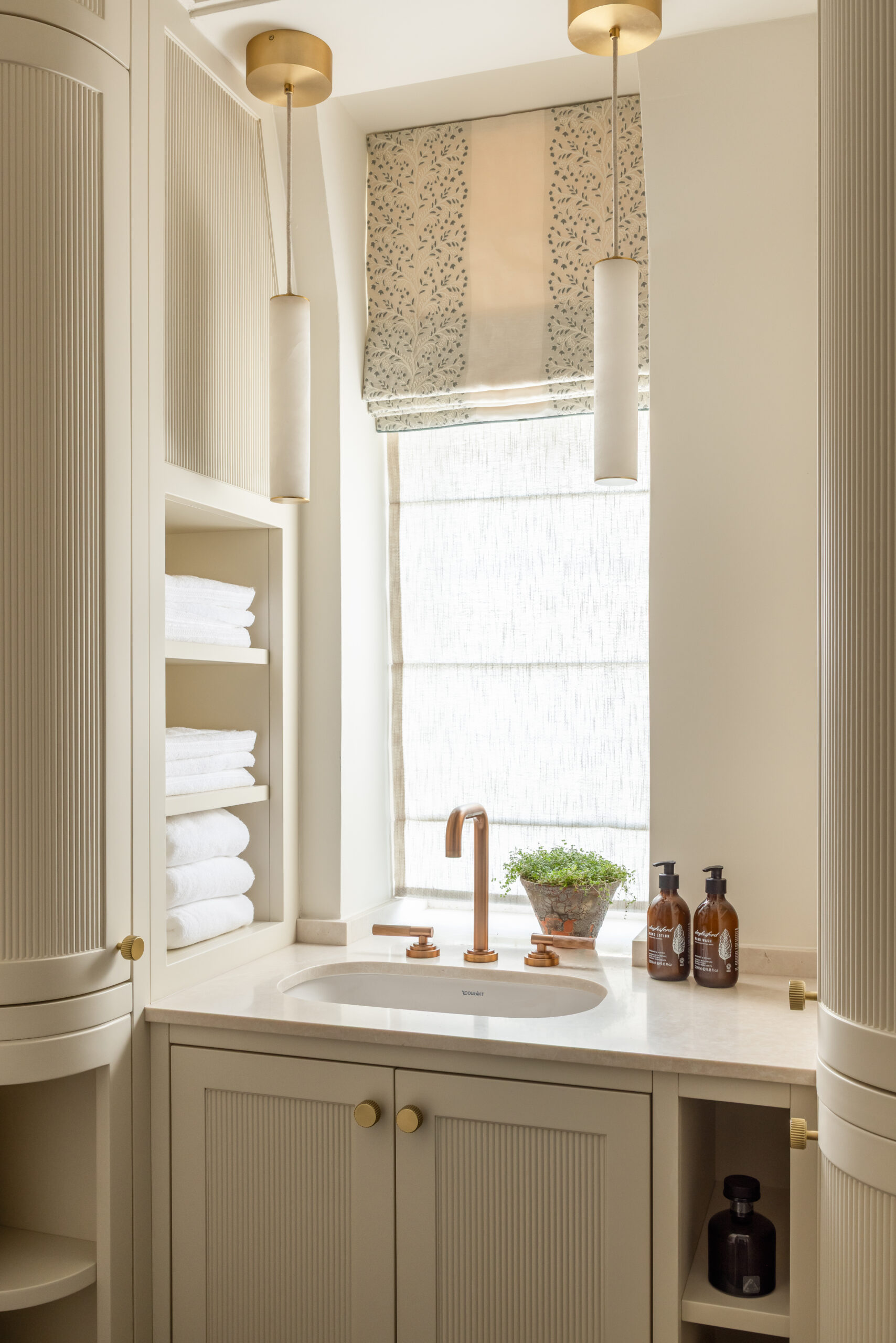
Image of a master bathroom in a Chelsea pied-a-terre renovation with complete bespoke cabinetry

Which unexpected window treatment pairings are we most excited about for 2026?

One combination we are particularly drawn to right now is woven or natural blinds layered with full-length drapery — a pairing we are currently exploring within a live project. The tactile quality of woven blinds brings warmth and a sense of grounded calm, while the drapery adds scale and softness, framing the room elegantly.

“The combination we return to most consistently is a blackout Roman blind paired with full length drapery, and at times a sheer layer for added privacy”. 

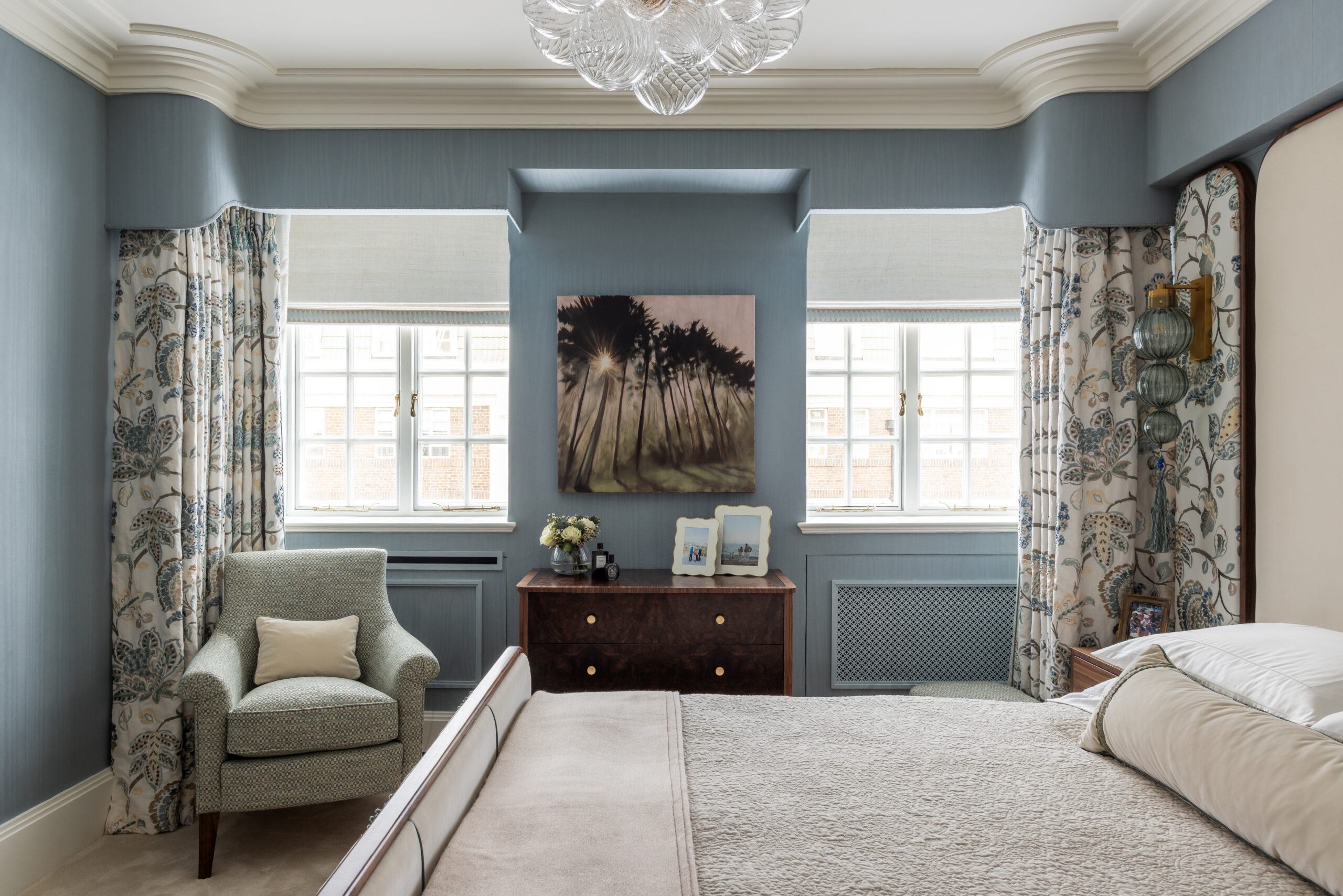
In bedrooms, complete darkness is often essential. The blind addresses that need with precision, while the drapery introduces softness and proportion, and allows the wider design language of the room to be carried through. It is a simple pairing, but one that ensures function and atmosphere work seamlessly together. That clarity of purpose is, for us, what gives any double (or triple) dressed window its ‘it’ factor.

Image of a renovated guest bedroom in a character pied-a-terre in Chelsea

Where do people tend to go wrong — and how can they get it right?

The most common pitfall is a lack of hierarchy. Without a considered relationship between layers, the treatments compete rather than complement. Each element needs a clear role — one leads functionally, the other supports decoratively — and that intention must be established from the outset.

The second is underestimating proportion. Decisions around mounting height, curtain length, fullness, and alignment can seem minor, but they have a significant impact on the overall effect. A blind mounted too low, or curtains that don’t quite break at the floor, will undermine even the most beautifully chosen fabric.

Principles for getting it right are:

1. Begin with purpose. Establish what the window needs to do functionally before introducing additional layers.  The decorative should always support the practical, not compete with it.
2. When in doubt, commit to texture over pattern. Layering tonal, tactile materials is a forgiving and elegant approach – and one that rarely fails.
3. Consider the window within the room.  The treatment should feel deliberate in placement and resolved in relation to the surrounding space.

Done well, the window dressing is the detail that makes everything else make sense. It has a real voice — and it is often the thing that transforms a room from put-together to truly memorable.

The images showcased here have been drawn from a few of the luxurious property renovations we have undertaken in prime central London, specifically Chelsea. Our interior design studio specialises in the renovation of character properties. In all of these projects we were our clients primary contact, delivering on all aspects of design, build and fit out. We started with tired apartments that had endured multiple make-overs following a string of owners, and delivered considered, elegant apartments that celebrate their heritage, whilst looking forward energetically; fit for modern day living.